
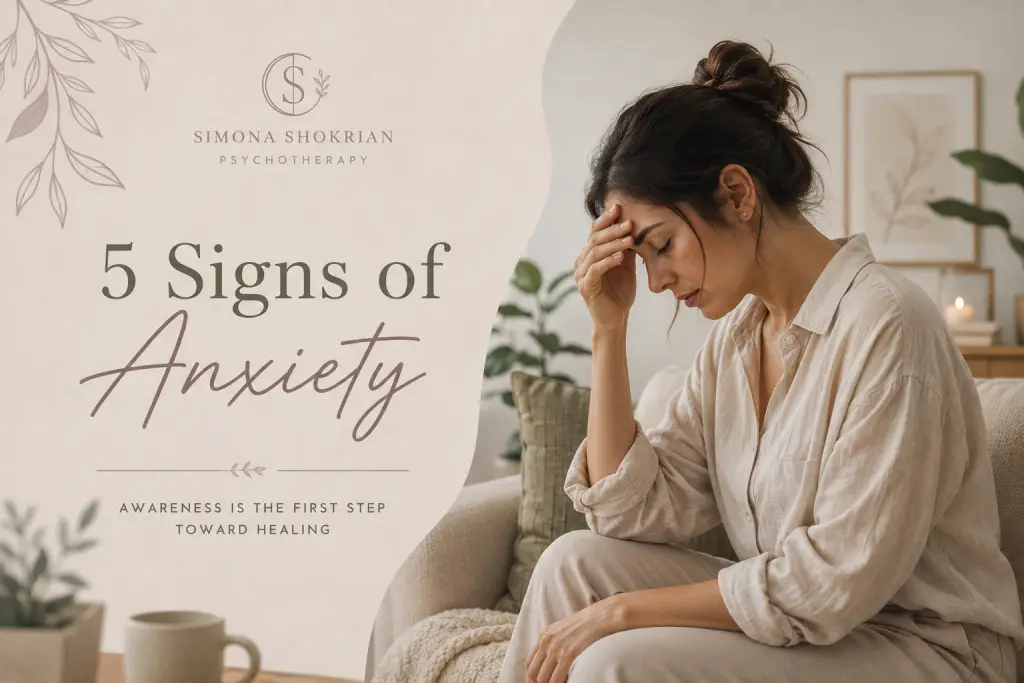
Feeling constantly on edge, overthinking every interaction, or waking up with a tight chest doesn’t mean you’re just “stressed”—it could be your body’s alarm system stuck in overdrive.
Spotting the primary signs of anxiety early is the first step toward getting your peace of mind back.
Here are the 5 core signs that point to anxiety:
- Excessive, hard-to-control worry
- Restlessness or feeling constantly on edge
- A racing heart or sudden chest tightness
- Persistent trouble sleeping
- Difficulty concentrating or “brain fog”
What Is Anxiety, Exactly?
Anxiety is your body’s natural response to stress—a survival mechanism designed to alert you to danger. However, when these alarm bells keep ringing long after the threat is gone, it shifts from normal stress into chronic distress. Understanding what is an anxiety disorder symptoms boils down to this: stress disappears once a pressure point passes, but anxiety lingers, creating ongoing physical and mental tension even when everything seems fine on the surface.
5 Signs of Anxiety
Knowing what are the symptoms of anxiety requires looking at both how your mind processes fear and how your physical body responds to it.
1. Excessive, Hard-to-Control Worry
If your brain constantly runs worst-case scenario loops that you can’t seem to turn off, you are experiencing the hallmark mental sign of anxiety. So, what does anxiety feel like in this state? It feels like living in a constant state of “what if,” where small issues snowball into catastrophic outcomes in your mind, leaving you emotionally exhausted before your day even starts.
2. Restlessness or Feeling On Edge
Physical tension is just as telling as mental strain. You might find yourself unable to sit still, pacing around the room, picking at your skin, or constantly tapping your feet. It’s that persistent, uncomfortable sensation that you need to run or act, even when you’re supposed to be relaxing.
3. Racing Heart or Heart Palpitations
When anxiety spikes, your nervous system pumps out adrenaline, triggering a full “fight-or-flight” response. Your heart rate surges, your breathing becomes shallow, and you might feel a fluttering sensation in your chest. This physiological response is one of the most alarming anxiety symptoms, frequently causing people to mistake an anxiety flare-up for a medical emergency.
4. Trouble Sleeping
Anxiety and sleep issues feed off each other in a vicious cycle. You lay down exhausted, but the second your head hits the pillow, your brain decides it’s time to review every flaw, mistake, or upcoming challenge. Whether it’s struggling to fall asleep or waking up at 3:00 AM with a racing mind, interrupted sleep is a huge indicator that your system is overloaded.
5. Difficulty Concentrating
When your brain is continuously scanning your environment for potential problems, it steals bandwidth from your working memory. You might catch yourself staring at the same email for ten minutes, forgetting simple tasks, or feeling like your head is filled with static. This cognitive fatigue is a direct result of chronic emotional strain.
Symptoms of Anxiety That No One Talks About (The Hidden Signs)
Most articles focus on the standard checklist of worry and fast heartbeats, but anxiety frequently manifests in stealthy ways that don’t look like typical fear. If you’ve been searching for weird physical symptoms of anxiety, you aren’t alone:
- Unconscious Jaw Clenching and Muscle Guarding: Waking up with a sore jaw, chronic neck tightness, or frequent tension headaches often means your body is holding onto physical tension while you sleep or work.
- Sudden Digestive Flare-Ups: Your gut and brain are directly connected through the vagus nerve. Sudden nausea, stomach cramps, or urgent trips to the bathroom right before an important event are physical manifestations of emotional stress.
- Derealization (“Zoning Out”): In moments of severe overload, your brain might try to protect you by making the world feel fake, foggy, or distant, as if you are watching your own life through a glass wall.
- Physical Symptoms Without Mental Worry: Many people experience tight chests, dizziness, or air hunger without consciously feeling “worried.” Your body can register and store stress long before your conscious mind realizes what’s happening.
What to Do If You Recognize These Signs
Recognizing these patterns in yourself isn’t a life sentence—it’s clarity. While self-identifying is helpful, this guide is informational and not a formal diagnosis.
If these signs are actively interfering with your daily routine, work, or personal relationships, you don’t have to navigate it on your own. Taking action can be as straightforward as practicing grounding techniques, setting firmer personal boundaries, or scheduling a consultation with a licensed professional. Working with an expert provides tailor-made tools to calm your nervous system and help you take back control.
Frequently Asked Questions
What are the symptoms of anxiety vs. depression?
Anxiety is primarily characterized by high energy, hyper-vigilance, racing thoughts, and physical restlessness. Depression tends to present as low energy, persistent sadness, emotional numbness, and a loss of interest in activities you used to enjoy. However, it is extremely common to experience both simultaneously.
What does an anxiety attack feel like?
An anxiety attack feels like a sudden wave of intense physical and emotional panic. Symptoms include a pounding heart, shortness of breath, dizziness, sweating, trembling, and an overwhelming feeling that you are losing control or that something terrible is about to happen.
How to reduce anxiety immediately?
To ground yourself fast, engage your physical senses using the 5-4-3-2-1 technique: name 5 things you can see, 4 you can touch, 3 you can hear, 2 you can smell, and 1 you can taste. Pair this with slow, deep breaths where your exhale is longer than your inhale to signal safety to your nervous system.
How to live a good life with anxiety?
Living well with anxiety means learning how to manage your nervous system rather than expecting total perfection. By using evidence-based therapy tools, building healthy daily routines, maintaining boundaries, and seeking support when needed, you can build a fulfilling, ambitious life without anxiety calling the shots.
Can anxiety go away on its own?
While minor situational stress passes once a problem is resolved, chronic anxiety rarely disappears without intentional adjustments. Developing self-regulation strategies, shifting behavioral habits, or engaging in professional counseling are the most reliable ways to achieve long-term relief.